

Beneath Kraków lies a kingdom of salt: a 700-year-old mine conceals an underground cathedral
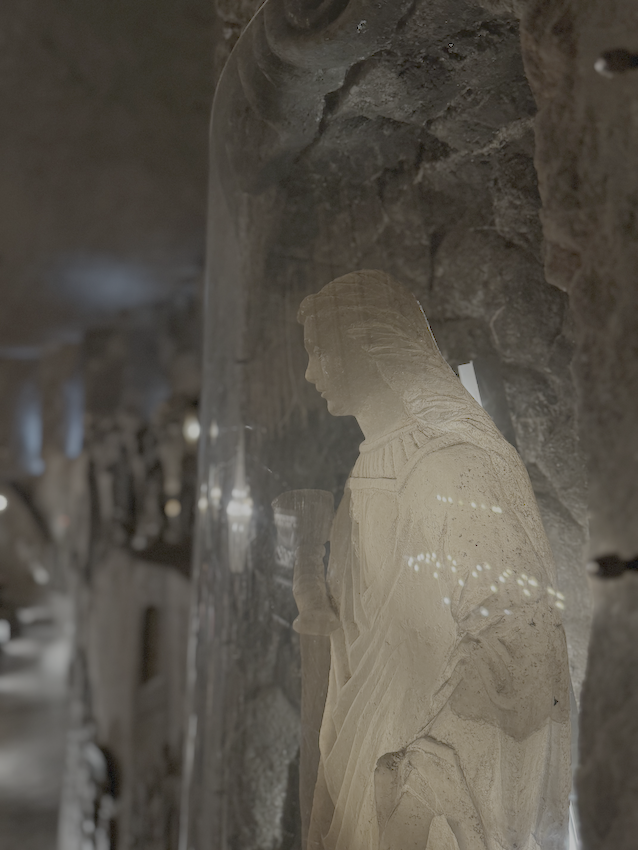
More than 100 metres below ground stands a church whose floors, altars, sculptures and chandeliers are made of salt. Surrounding it is a labyrinth of tunnels stretching for hundreds of kilometres, with a history dating back to the Middle Ages. The Wieliczka Salt Mine is one of Europe’s most extraordinary attractions, yet it can be reached from central Kraków by an ordinary local bus in about half an hour.
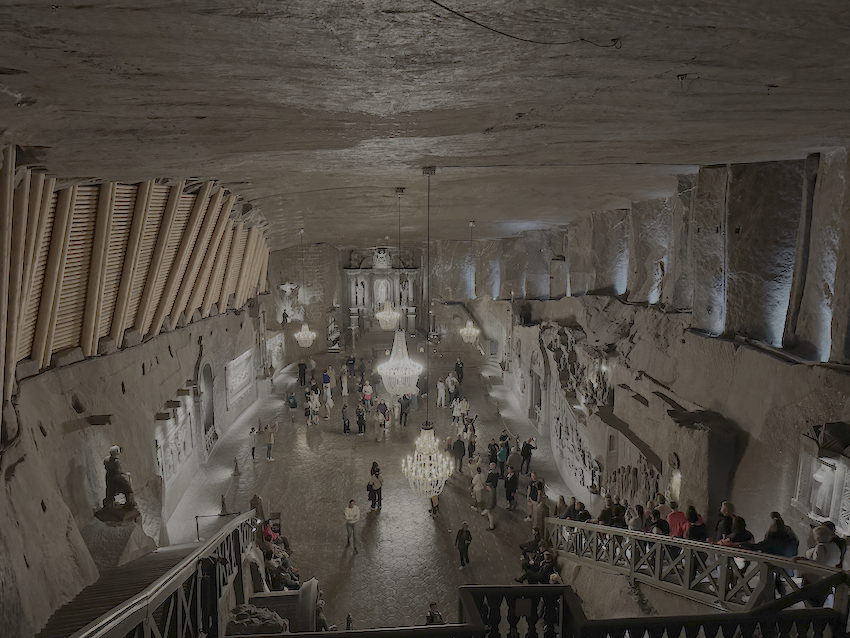
Above ground, Wieliczka looks like an ordinary Polish town. Beneath it, however, lies an entire underground world of enormous chambers, salt lakes, timber structures and religious works of art.
The Wieliczka Salt Mine is one of the most impressive places I have ever visited. Even photographs struggle to convey its sheer scale, although the extraordinary underground scenery provides countless opportunities for spectacular pictures. The mine contains more than 240 kilometres of tunnels, around 2,350 excavation chambers and nine levels. Its deepest passages reach 327 metres below ground. The standard tourist route covers only a fraction of this vast network, yet there is more than enough to marvel at.
The miners built their own cathedral
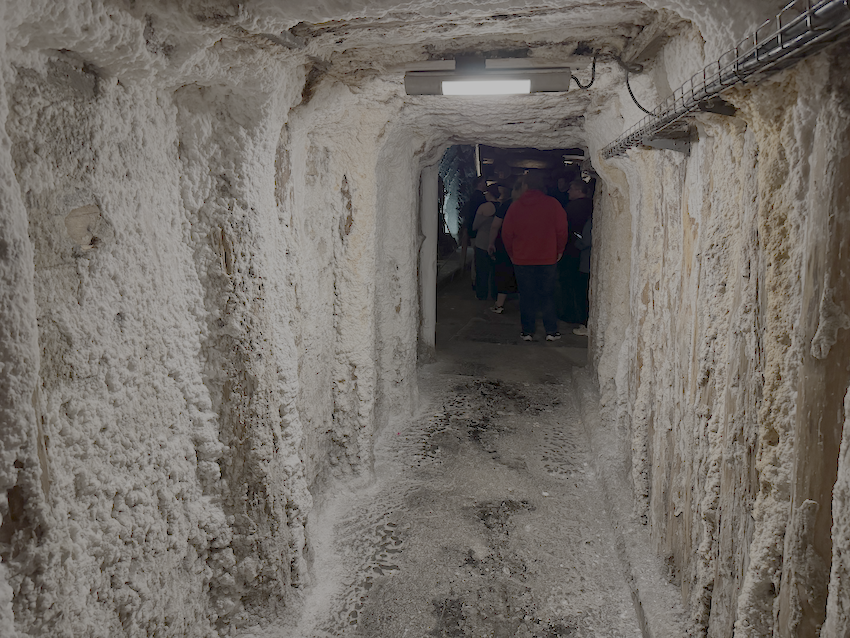
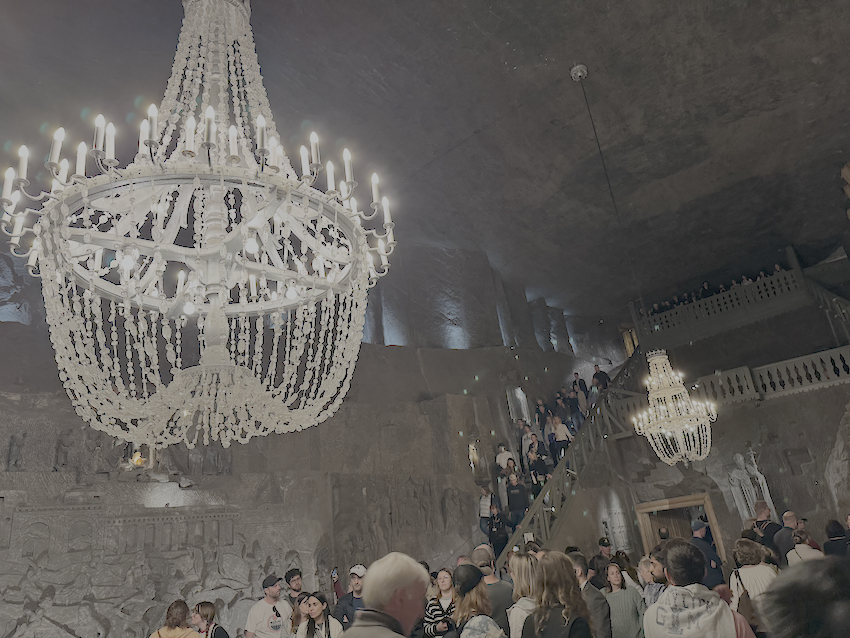
Wieliczka’s most famous attraction is the Chapel of St Kinga, known in Polish as Kaplica św. Kingi.
The word chapel hardly does justice to this extraordinary underground church. It is 54 metres long, 18 metres wide and approximately 12 metres high. The entire structure lies 101 metres below the surface.
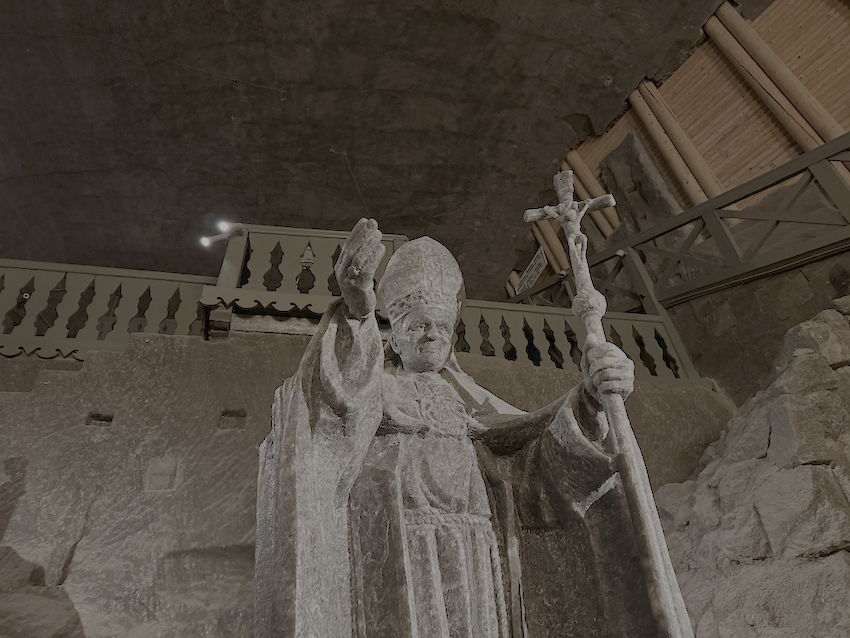
Its most remarkable feature is the building material. The church’s floors, altars, wall reliefs, sculptures and chandelier crystals are all made of salt.
Construction began in 1896 in a disused mining chamber. Decoration continued for decades, with much of the work carried out by the miners themselves.
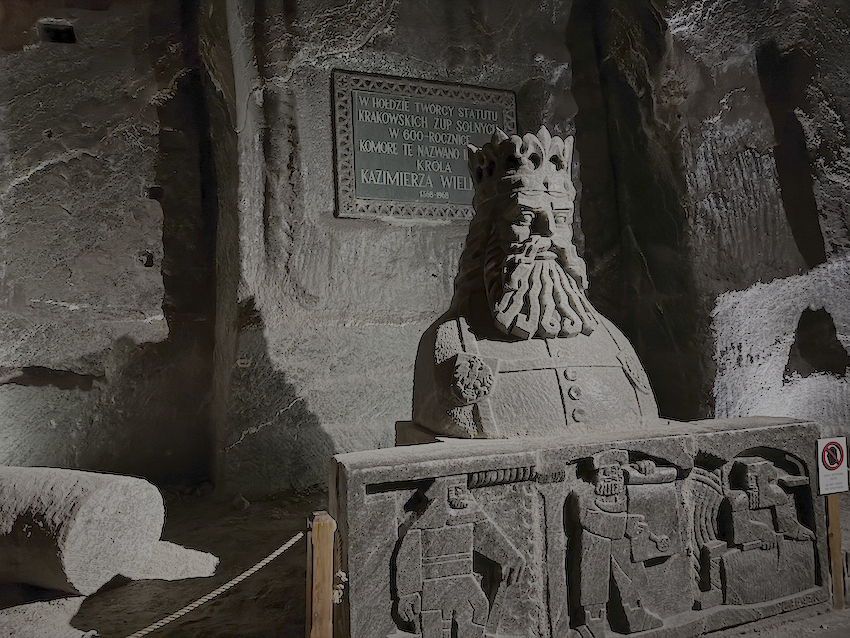
Among the principal craftsmen were Józef and Tomasz Markowski and Antoni Wyrodek, who elevated salt carving to an extraordinary art form.
The chapel’s walls feature a relief based on Leonardo da Vinci’s The Last Supper, along with other biblical scenes. The intricacy of the sculptures is astonishing.
There are several other religious spaces in the mine, including the Chapel of St Anthony, dating from the seventeenth century.
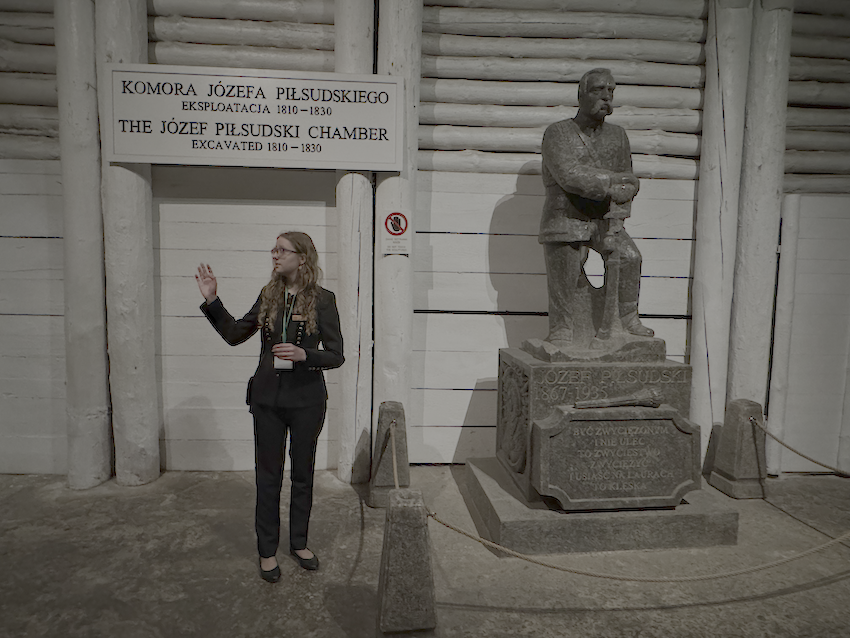
Religion played an important part in the miners’ lives. Working deep underground was dangerous. Collapses, fires, poor ventilation and water entering the mine were constant threats. Miners sought the protection of saints, while the chapels served the spiritual needs of the mining community.
The Chapel of St Kinga still hosts religious services, concerts and even weddings.
The tour also passes old lifting machinery, remnants of horse-powered transport systems and enormous wooden support structures. The towering timber constructions in the Michałowice Chamber are particularly impressive, demonstrating the sophistication of mining engineering long before modern machinery became available.
Salt was the white gold of medieval Europe
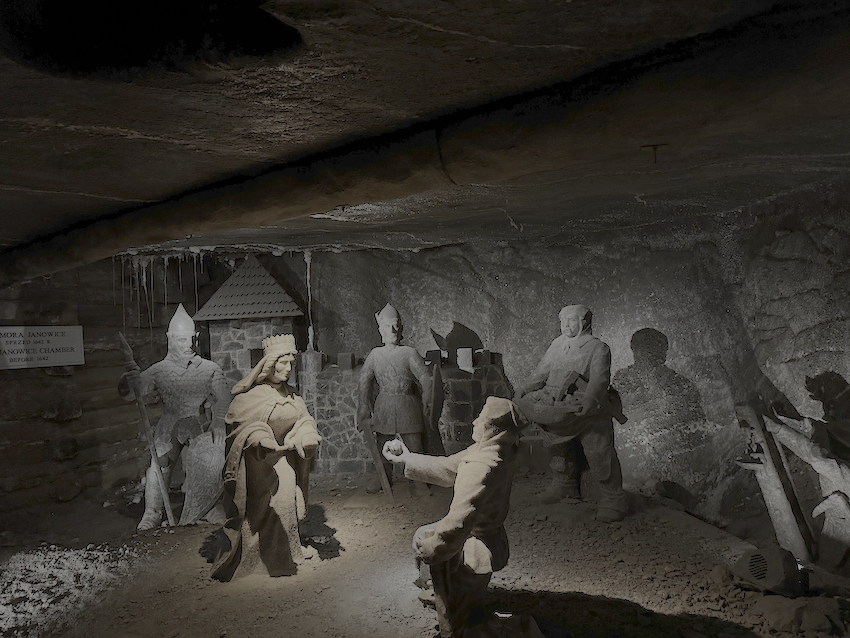
To appreciate Wieliczka’s historical importance, one must understand the role of salt in Europe’s economic development.
Today, a packet of table salt costs next to nothing. In the Middle Ages, however, salt was a strategic commodity from which rulers derived substantial revenues through production and trade.
Above all, salt was essential for preserving food. Before refrigeration and industrial cold chains, the long-term preservation of meat and fish depended heavily on salting. Salt was also indispensable in cheese-making, leather processing and numerous traditional crafts.
Demand was constant and extended throughout society.
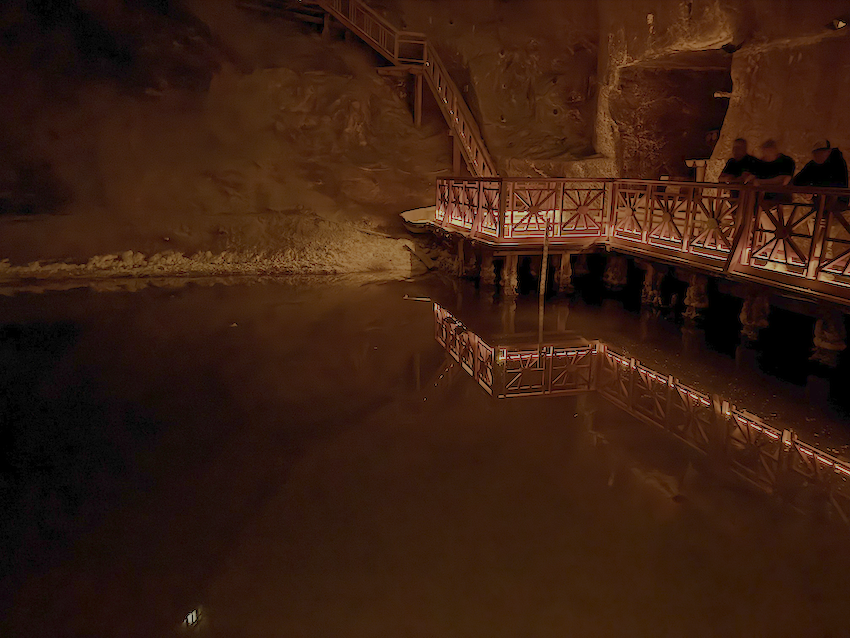
In Poland, the mines at Wieliczka and nearby Bochnia became particularly important. During the reign of King Casimir III the Great in the fourteenth century, revenues from salt production in the Kraków region are estimated to have accounted for as much as a third of the royal treasury’s income.
Salt revenues financed construction projects, administration and education. They also supported the Kraków Academy, today’s Jagiellonian University.
The mine’s history, however, stretches much further back. Salt resources in the area were being exploited around 5,500 years ago, when people produced salt by evaporating saline spring water.
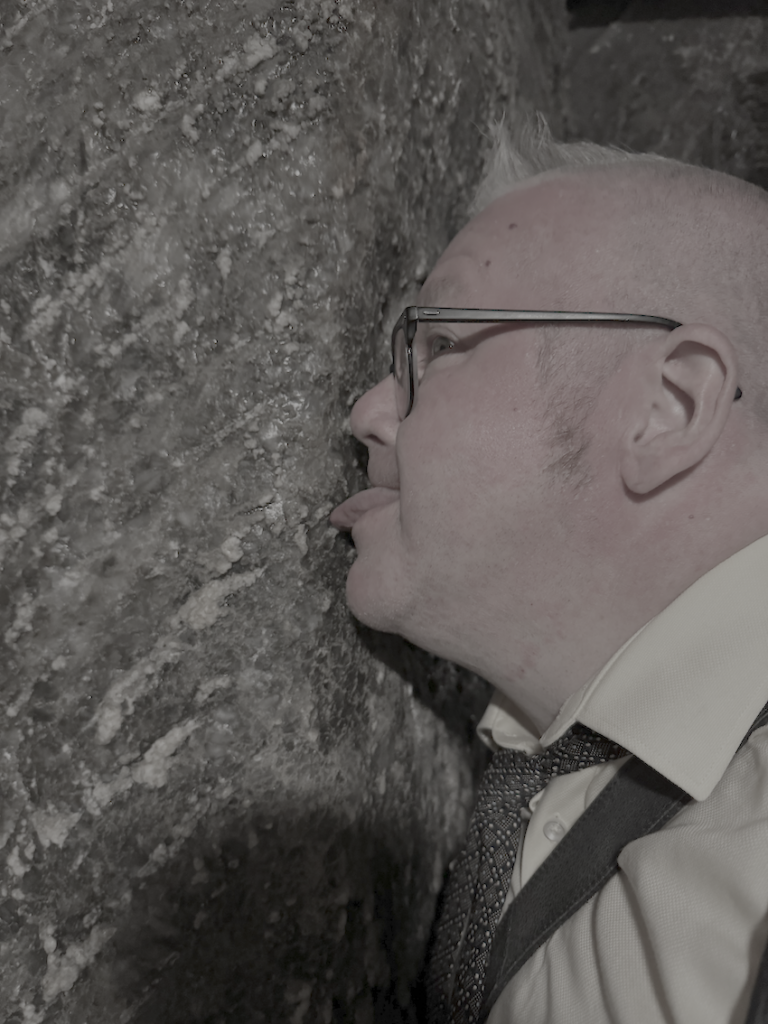
Underground rock-salt mining began in the thirteenth century. Wieliczka received its town charter in 1290, and together with Bochnia, its mine developed into a royal enterprise known as Żupy Krakowskie, the Kraków Saltworks.
It became one of the most important industrial enterprises in medieval Europe.
In 1368, Casimir the Great introduced regulations governing the salt mines. Production, trade and administration were tightly controlled, reflecting the kingdom’s considerable dependence on salt revenues.
During the saltworks’ heyday, from the sixteenth century to the mid-seventeenth century, the enterprise employed around 2,000 miners and produced more than 30,000 tonnes of salt annually.
Salt trading connected Europe
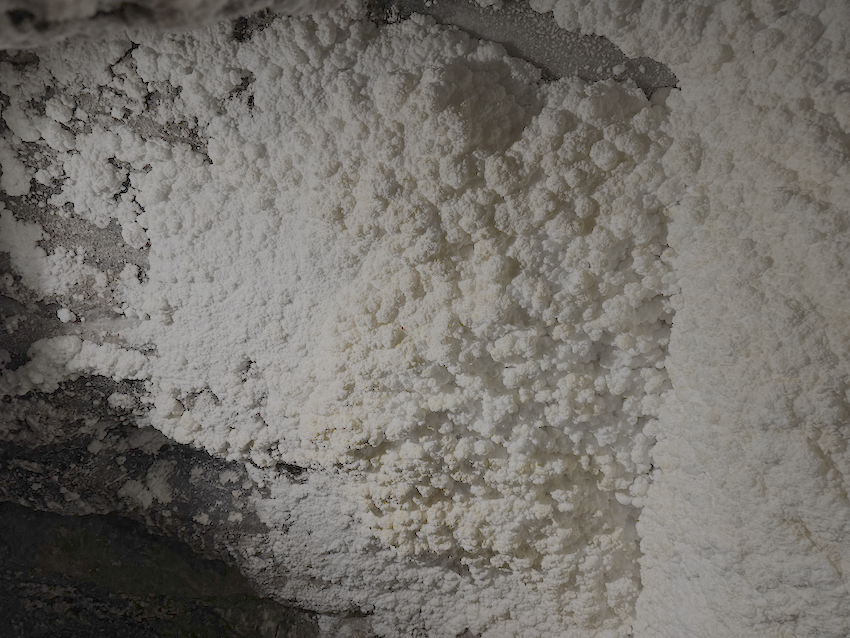
Salt from Wieliczka was transported across Central Europe, including to Silesia, Moravia, Bohemia and Hungary. Horse-drawn wagons and river routes formed a transport network around which storage facilities, trading businesses and new industries developed.
Salt also played a significant role in Northern Europe’s economic history.
Salt production in Lüneburg, northern Germany, was an important factor in the growth of Hanseatic trade. Salt was transported through Lübeck to the Baltic region, where it was particularly valuable for preserving herring.
The great medieval herring markets of Scania, in what is now southern Sweden, depended on supplies of salt. Preserved fish could be transported over long distances, transforming local fishing into an international commercial enterprise.
Finland’s coastal towns were also part of this network. Preserving and trading fish required salt, which had to be imported.
Europe had several major salt-producing regions. Along the Mediterranean coast, seawater was evaporated using the sun’s heat, while Central Europe relied on rock-salt deposits and saline springs.
Salt-producing regions and trading routes generated wealth, encouraged urban growth and influenced political power.
A mine that survived the rise and fall of empires
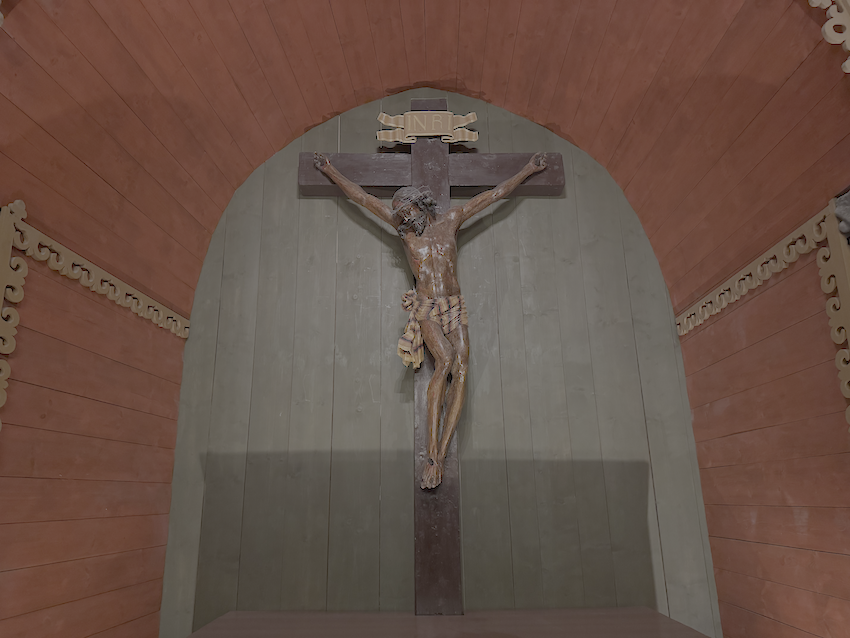
Wieliczka’s history also reflects the turbulent political fortunes of Poland.
Following the First Partition of Poland in 1772, the mine came under the control of the Austrian Habsburgs. Production continued, and mining technology advanced during the nineteenth century with the introduction of steam engines and, later, electrically powered machinery.
The mine returned to Polish control in 1918, following the First World War.
Conventional rock-salt extraction ended in 1964, although industrial salt production using other methods continued until 1996.
Wieliczka’s history as a tourist attraction is older still. Visitors had been exploring the mine for centuries. Initially, they were mainly rulers, scholars and other privileged guests, but organised tourism began developing towards the end of the eighteenth century.
In 1978, Wieliczka was inscribed on UNESCO’s World Heritage List as one of its very first sites. In 2013, the World Heritage property was extended to include the Bochnia Salt Mine and the historic Saltworks Castle in Wieliczka.
Today, the mine is an invaluable monument to Europe’s industrial heritage, requiring continuous maintenance and conservation.
The legend of St Kinga’s ring
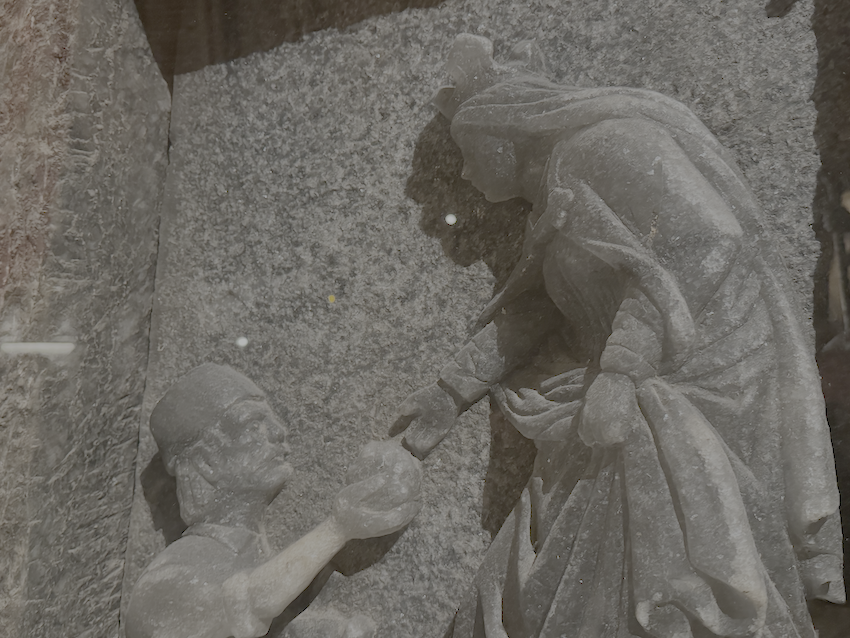
Wieliczka also has a charming legend associated with its origins.
The patron saint of the mine is Kinga, a Hungarian-born princess who married the Polish ruler Bolesław V in the thirteenth century.
According to legend, Kinga dropped her engagement ring into a Hungarian salt mine. Later, in Poland, miners discovered a large block of salt containing the princess’s ring.
The story holds that this was how salt came to Poland.
Kinga was canonised by the Catholic Church in 1999.
Getting there from Kraków is remarkably easy
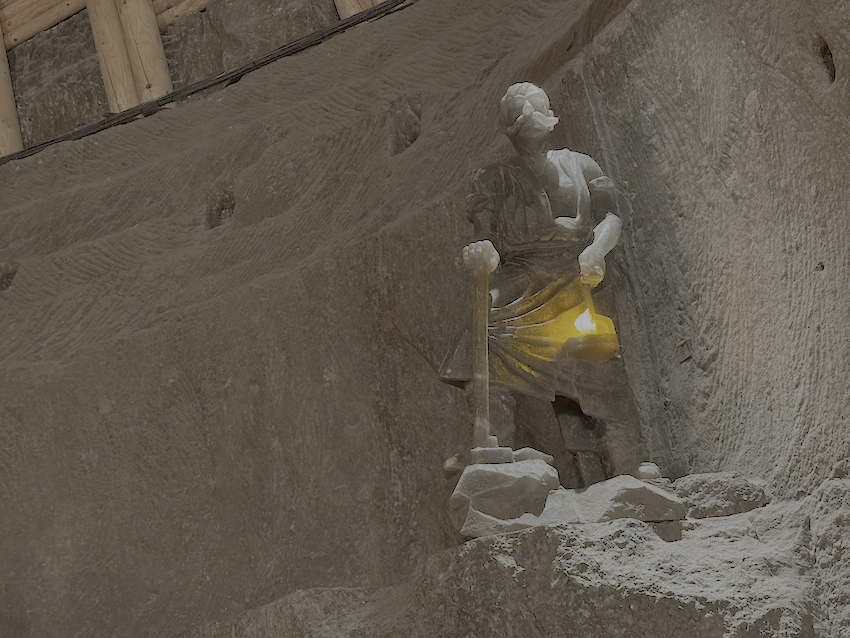
Visiting Wieliczka independently is straightforward. I travelled there by ordinary local bus, and there is little need to book an organised tourist excursion.
Bus 304 departs from Dworzec Główny Zachód, on the western side of Kraków’s main railway station, near the Galeria Krakowska shopping centre. For the salt mine, get off at Wieliczka Kopalnia Soli.
The journey takes approximately 30 to 45 minutes, depending on traffic.
Buying a bus ticket proved a little awkward on my visit, but purchasing one through a mobile app worked well. Kraków’s public transport network is supported by apps such as Jakdojade, which provides route information and allows passengers to buy tickets.
Make sure your ticket is valid for Wieliczka, which lies outside Kraków’s central fare zone.
Another option is the local train from Kraków Główny to Wieliczka Rynek-Kopalnia, followed by a short walk to the mine.
I strongly recommend booking your admission ticket in advance.
Visitors enter the mine in guided groups departing at scheduled times. Departure intervals and available languages vary. During busy periods, tours can fill up quickly, and buying a ticket on arrival may mean a considerable wait.
The official online ticket office allows visitors to select a suitable departure time and language.
Tickets: https://bilety.kopalnia.pl/
The standard tourist route is approximately 3.5 kilometres long, and the guided tour generally takes between two and three hours.
The visit begins with a descent of 380 steps to a depth of around 64 metres. There are approximately 800 steps along the entire route, which reaches a maximum depth of about 135 metres. Visitors return to the surface by lift.
The underground temperature remains around 17–18°C throughout the year, so a light jacket and comfortable shoes are advisable. Allow at least half a day for the visit, including travel.
Wieliczka is an absolute must-see. These photographs barely begin to capture its splendour.
Read More:
- UNESCO World Heritage Centre: Wieliczka and Bochnia Royal Salt Mines
- Muzeum Żup Krakowskich Wieliczka: Historia Kopalni Soli
- Cracow Saltworks Museum in Wieliczka: Salt Mine History
- Muzeum Żup Krakowskich Wieliczka: Kaplica św. Kingi 101 m pod ziemią
- Visit Małopolska: Wieliczka salt
- Kopalnia Soli „Wieliczka”: Trasa Turystyczna
- Kopalnia Soli „Wieliczka”: Mapa i dojazd
- Miejskie Przedsiębiorstwo Komunikacyjne w Krakowie: KMK ticket guide
- The Hanse: The origins
Leave a Reply