

Poland’s Easter: Painted Eggs and Water Fights

Easter in Poland is a layered, theatrical, and deeply rooted ritual season where Catholic liturgy meets folk custom, family memory, and a certain unapologetic sense of mischief. Across cities and villages alike, the holiday unfolds as a sequence of symbolic acts, each carrying centuries of meaning.
Holy Saturday: Baskets of Meaning
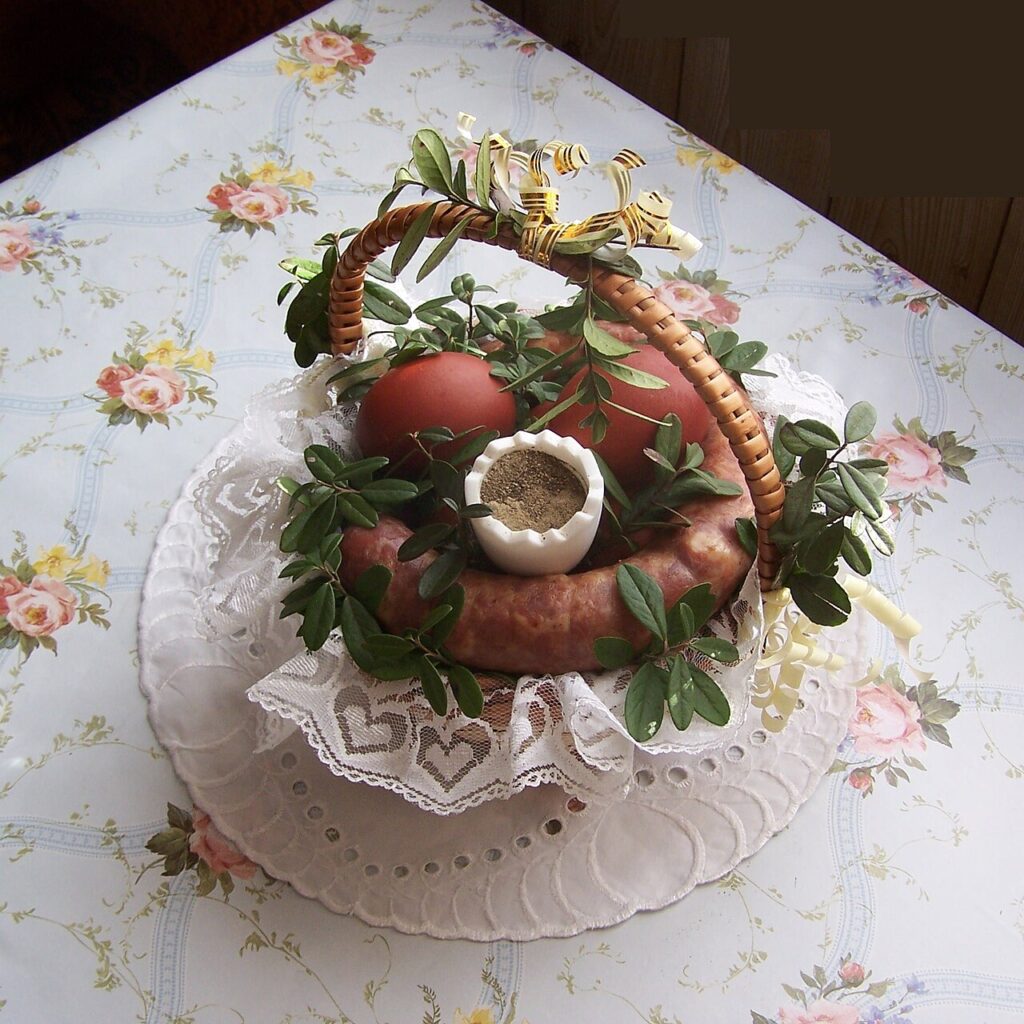
The Easter weekend begins in earnest on Holy Saturday with Święconka, the blessing of Easter baskets. Families prepare carefully curated baskets filled with symbolic foods: eggs for life, bread for sustenance, salt for purification, sausage for abundance, and horseradish for the bitterness of Christ’s suffering.
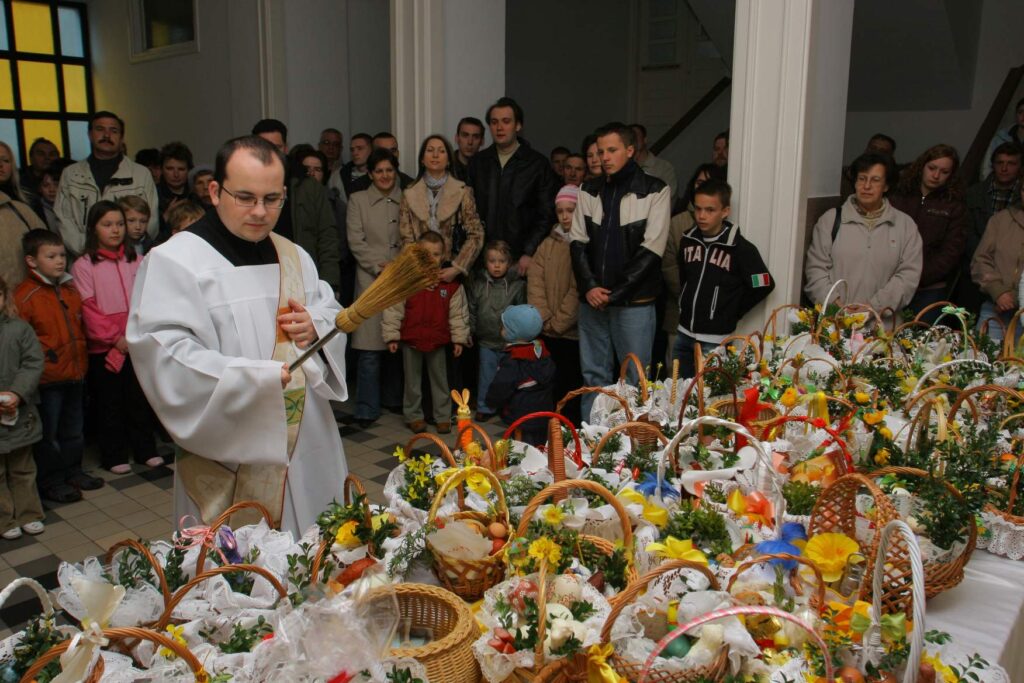
These baskets are taken to church, often lined up in rows, a quiet but visually rich ritual. The act is less about spectacle and more about continuity. In a country where religion and national identity have long intertwined, this moment carries both spiritual and historical weight.
Easter Sunday: Resurrection and Restraint
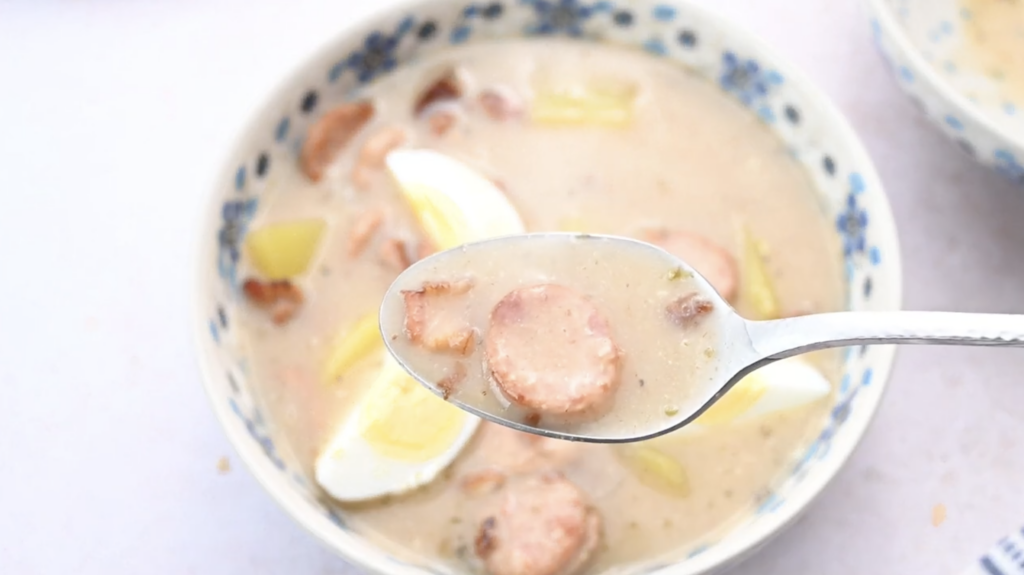
Sunday morning begins early, sometimes with a sunrise mass. The meal that follows is formal, almost restrained, compared to what comes next. The table features żurek (a sour rye soup with white sausage), boiled eggs, cold cuts, and sweet breads like babka.
There is a sense of order and reflection. Conversations are measured, the tone respectful. After Lent’s austerity, the meal marks renewal, but not excess.
Pisanki: Colour as Identity
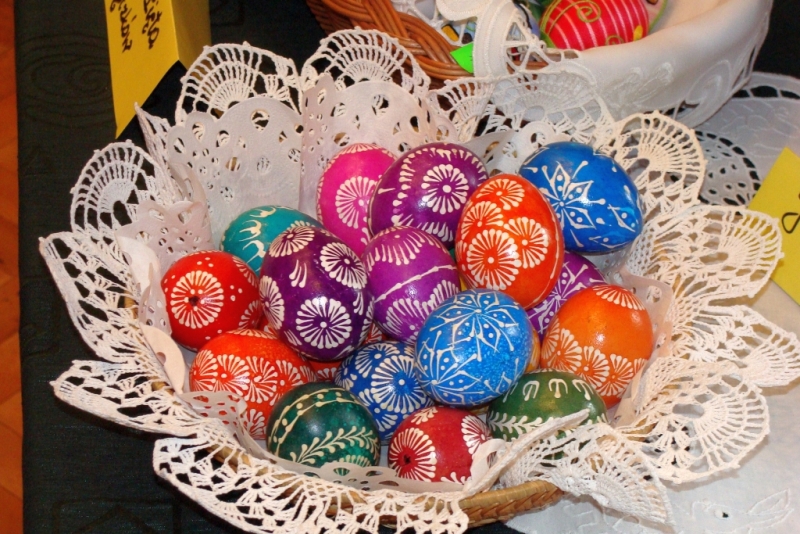
Decorated eggs, known as pisanki, are central to Polish Easter. Techniques vary from wax-resist methods to intricate hand painting. Patterns are not random. They often reflect regional identities, family traditions, and even protective symbols.
In many households, making pisanki is a shared activity that quietly transmits cultural knowledge across generations.
Easter Monday: Controlled Chaos
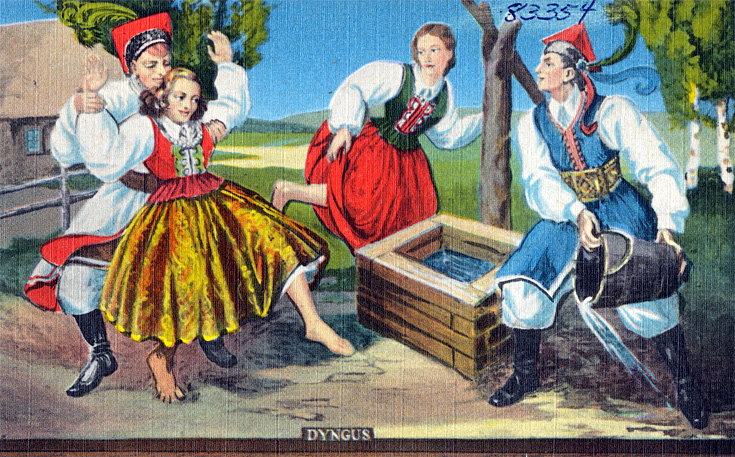
Śmigus-dyngus reflects Poland’s early Christian heritage, marking both conversion and renewal. Comparable traditions exist across Central Europe, including Hungary’s locsolkodásand Slovakia’s oblievačka, where water plays a similar ritual role.
The day blends religious observance with social custom. Families visit or contact relatives, often exchanging decorated Easter eggs. Church attendance has traditionally remained strong, reinforcing the day’s link to the Easter liturgy.
Water remains the defining element. On Easter Monday, people splash one another, with boys traditionally dousing girls. Buckets, water guns, even entire ambushes. In some towns, it resembles a sanctioned street battle. Yet beneath the laughter sits an older logic, a ritual of cleansing, renewal, and social play.
The act carries symbolic meaning, purification, renewal, and the closing of Lent, before the shift into feasting and celebration.
Read More:
- Polska Organizacja Turystyczna: Wielkanoc w Polsce – tradycje i zwyczaje
- Culture.pl: Polish Easter Traditions
- BBC Travel: The Meaning Behind Poland’s Easter Traditions
- National Geographic Polska: Wielkanoc – zwyczaje i symbole
- Visit Poland (Polish Tourism Organisation): Easter in Poland
- Wikipedia: Święconka (English)
- Wikipedia: Easter egg (English)
- Wikipedia: Śmigus-dyngus (English)
Leave a Reply